

Two Weeks Offshore: When the Field Forces You to Adapt the Plan

Exceptional Missions — Episode 1
This is not an AI-generated image. This is a real-life mission.
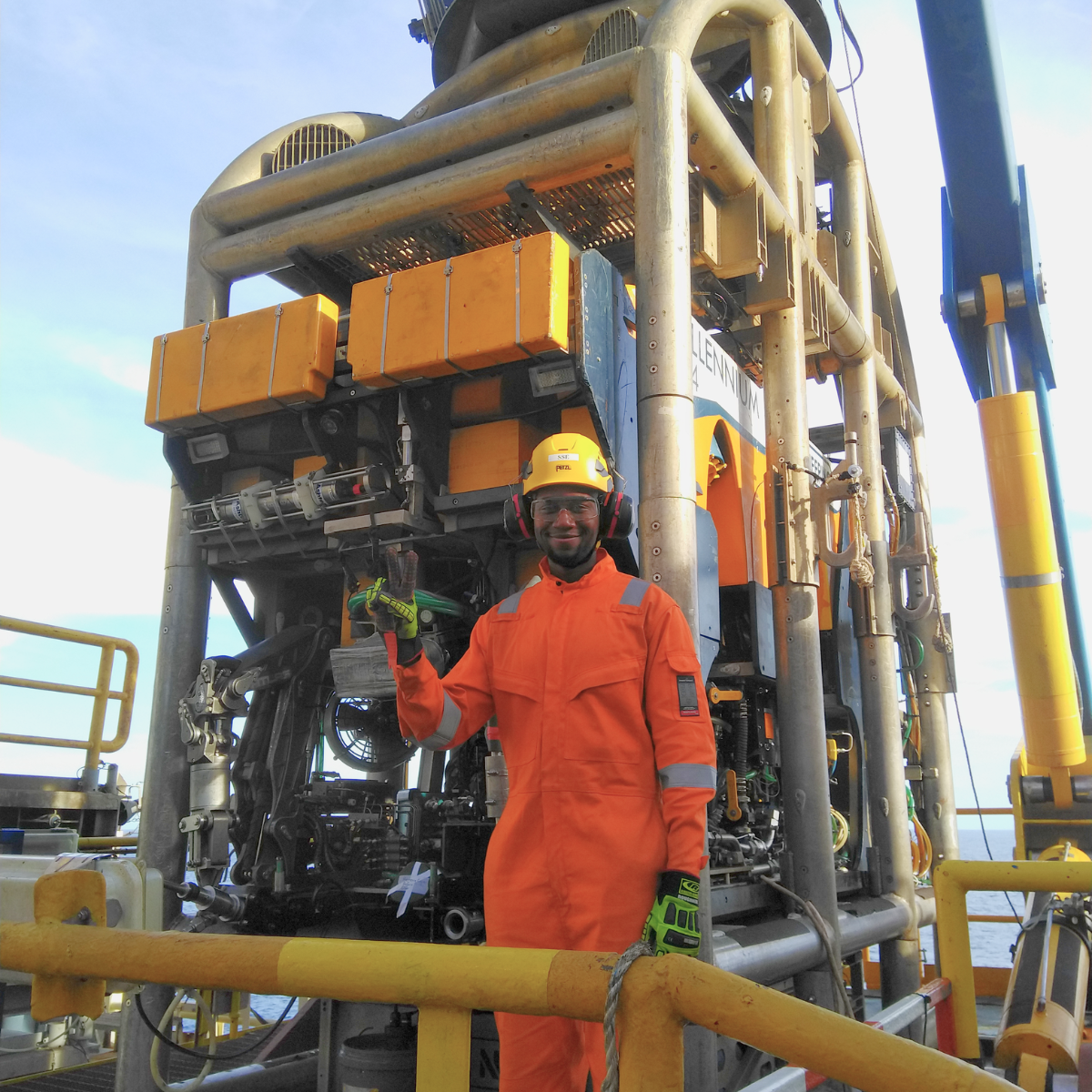
Two weeks on an offshore platform in the Asia-Pacific region, at the heart of an exploration campaign led by an international energy company. For Salia, a network consulting engineer at CNS, this offshore mission requires both strong technical preparation and the ability to adapt the plan when the field imposes its own constraints.
With Exceptional Missions, CNS shares professional experiences that fall outside the usual framework. Through these stories, consultants share the demands of working in the field, the decisions they make and the lessons they take away from each experience.
The mission at a glance
- Context: an offshore exploration campaign in the Asia-Pacific region.
- Duration: two weeks on site.
- Salia’s role: as the only network engineer present, he supports the deployment, resolves incidents and provides assistance to the teams.
- Handover: the operations teams take over once the mission is completed.
Before deploying, understand what is truly possible
Before Deploying, Understand What Is Truly Possible
Before deploying, understand what is truly possible
On the platform, connectivity is directly linked to operations.
The teams need access to internal tools hosted in the data centres, send their measurements to the teams onshore and communicate between the different areas of the site.
Internet access also enables people staying on board for several weeks to remain in contact with the outside world.
Local area network (LAN), Wi-Fi, telephony: the needs may seem familiar. But every decision must be assessed against the existing installations. Salia therefore begins by studying the site, identifying its constraints and determining what can realistically be deployed.
“They may say: ‘We want Wi-Fi in every room!’ But if I see on site that there is no suitable location to install access points and provide that coverage, I can flag it immediately.”
His role goes beyond translating a request into equipment. He must also question what was initially planned and propose a realistic response.
Based on this assessment, Salia defines the network architecture:
- the number and location of network switches, Wi-Fi access points and telephones;
- the configurations and IP addressing plans;
- the distribution of bandwidth and discussions with the satellite connectivity provider regarding routing.
The equipment is then prepared before being shipped to the platform.
“Once everything is approved, it is time to get to work: configure everything, run the tests and make sure it all works.”
The goal is to reduce uncertainty as much as possible. But Salia also knows that once on site, there will inevitably be discrepancies.
“Then comes the installation on site, along with incident resolution if there are any… spoiler: there always are.”
When the planned scenario no longer works
One of these unexpected situations has a particularly strong impact on the mission. During the campaign, geologists collect and analyse measurements from drilling operations and various sensors.
Part of the team works from a container located outside the main offices. In the offices, another geologist needs to receive the data, analyse it and send it to the teams based onshore. A dedicated fibre link was initially intended to connect the two areas.
However, its deployment is delayed because of other constraints and priorities on the platform. The data is available, but it does not reach the people who need to use it.
“We ended up with a geologist who literally could not work because he was not receiving any data. This information had to be analysed on site and sent to the geology teams onshore.”
The question is no longer simply when the fibre link will be available. The teams need a way to continue working without it.
Adapting the response to the field
Start with the need rather than the planned solution.
Salia looks at the resources already available on the platform. The infrastructure he has just deployed offers another option: route the data through the installed switches.
“That is when I came up with the idea of routing the data through the switches we had installed. The required configuration was very quick to deploy and, once implemented, it was plug and play for them.”
Dedicated RJ-45 ports are configured. The teams can connect their workstations and resume exchanging data without waiting for the originally planned link.
The solution works well enough to be reused in other similar situations on the platform.
“They particularly liked the solution on site, so we rolled it out for other data transfers between two stations located far from one another.”
What was initially intended as a temporary response becomes a reusable solution. To achieve this, Salia went back to what the fibre link was meant to make possible: giving the right people access to the data they needed.
Where expertise becomes consulting
The technical solution itself is not necessarily the most complex part. The value lies in understanding the situation: assessing the impact of the blockage, identifying the available resources and determining what can be adapted.
The next step is to recommend a response that enables the client to continue its operations.
“When something does not go as planned, resourcefulness really makes the difference. You have to understand what you have available and find a solution that allows the teams to keep moving forward.”
In this context, a consulting approach means going back to the original need, taking a position and adapting the response when the field provides new information. Knowing how to implement a solution matters just as much as knowing when to question it.
Working in an extraordinary environment
A rare experience, close to operations.
Spending two weeks on an offshore platform is clearly a rare professional experience. This mission gives Salia the opportunity to apply his network expertise in an industrial environment that few engineers get to experience, for an international energy company.
What also makes the mission memorable is its proximity to operations: the impact of his decisions is immediately visible on the ground. When the scenario changes, he must remain clear-headed and adjust his response.
“These are high-stakes missions for the client, in a very specific industrial environment. The level of adrenaline is unique. You have to keep a cool head, and resourcefulness is a real asset.”
Technical expertise cannot be separated from the operational context. The experience requires preparation, observation, judgement and the ability to trust your own assessment when the situation no longer matches what was initially anticipated.
What this mission taught him
- Prepare thoroughly, without treating the plan as fixed.
- Understand the objective behind a technical request.
- Keep a cool head when the situation changes.
- Suggest another approach when the planned solution no longer meets the need.
Exceptional Missions, a CNS series
For this first episode, Salia took us offshore. In the coming weeks, other consultants will share their missions, the situations they encountered and the lessons they took away from them.
What if your next mission also took you out of the ordinary?